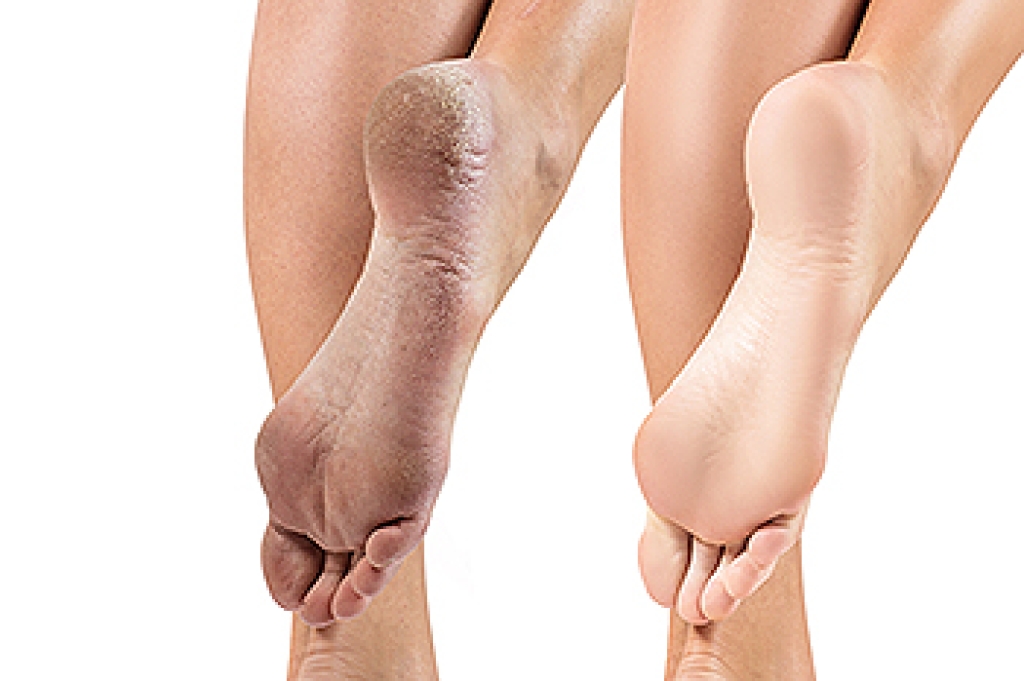
Cracked heels develop when dry, thick skin surrounding the heel loses flexibility and splits under pressure. The cracks can look like thin lines, but deeper openings can cause pain, bleeding, or tenderness while walking. Standing for long periods can place added stress on the heel. Shoes that fit poorly and open-back sandals can also let the heel spread outward. Age can raise the risk because skin becomes less flexible and produces less oil. Health problems like diabetes, psoriasis, and athlete’s foot can also contribute to cracked heels.
A podiatrist can examine the heels to determine how deep the cracks are and whether infection is present. The examination also looks for thick calluses, redness, and drainage. A podiatrist can check circulation and sensation in the feet, especially when a patient has diabetes or another condition that affects healing. Treatment includes the careful removal of hard, thickened skin with sterile instruments. This process reduces pressure near the cracks and helps the heel regain a smoother surface. The podiatrist can also apply protective dressings or recommend heel cups that support the heel’s padding. Deep cracks and termed fissures can require specialized wound care.
A podiatrist also addresses the forces that caused the skin to split. They can assess a patient’s gait, foot shape, and shoe fit. Custom orthotics can improve weight distribution when poor foot alignment places extra pressure on the heels. Advice about properly fitted, supportive shoes can help protect the skin and limit outward spreading of the heel. Regular podiatric evaluations are important for patients with poor circulation, reduced feeling, or a history of slow-healing wounds. Cracked heels should not be ignored when they bleed, become increasingly painful, or show redness and warmth. Early professional care can keep small splits from becoming deeper wounds and can lower the risk of infection. If you have painful cracked heels, it is suggested that you schedule an appointment with a podiatrist for effective treatment solutions, which may include prescribed medication.
If the skin on your feet starts to crack, you may want to see a podiatrist to find treatment. If you have any concerns, contact one of our podiatrists from Carolina Foot & Ankle Specialists. Our doctors can provide the care you need to keep you pain-free and on your feet.
Cracked Heels
It is important to moisturize your cracked heels in order to prevent pain, bleeding, and infection. The reason cracked heels form is because the skin on the foot is too dry to support the immense pressure placed on them. When the foot expands, the dry skin on the foot begins to split.
Ways to Help Heal Them
- Invest in a good foot cream
- Try Using Petroleum Jelly
- Ease up on Soaps
- Drink Plenty of Water
Ways to Prevent Cracked Heels
- Moisturize After Showering
- Skip a Shower
- Keep Shower Water Lukewarm
- Don’t Scrub Your Feet
If you are unsure how to proceed in treating cracked heels, seek guidance from a podiatrist. Your doctor will help you with any questions or information you may need.
If you have any questions, please feel free to contact our offices located in Mount Pleasant and Charleston, SC . We offer the newest diagnostic and treatment technologies for all your foot care needs.